What to look for when you hire a Nuxt.js developer
Not every frontend developer who lists Nuxt.js on their profile delivers the same thing. Here's what actually separates good work from expensive mistakes.
Most clients who come to me have already decided they want something custom. They've outgrown a template, they need performance their current site can't deliver, or they want an interface that's genuinely theirs. What they're less sure about is how to evaluate the person they hire to build it.
Here's what I look for, and what you should too.
What a developer's portfolio really tells you
A developer's LinkedIn certifications and GitHub activity tell you very little about what working with them actually looks like. A portfolio tells you a lot.
When you look at someone's work, ask three questions: does the site load fast? Does it hold up on mobile? Does the UI feel considered, or does it look like a template with the colours changed?
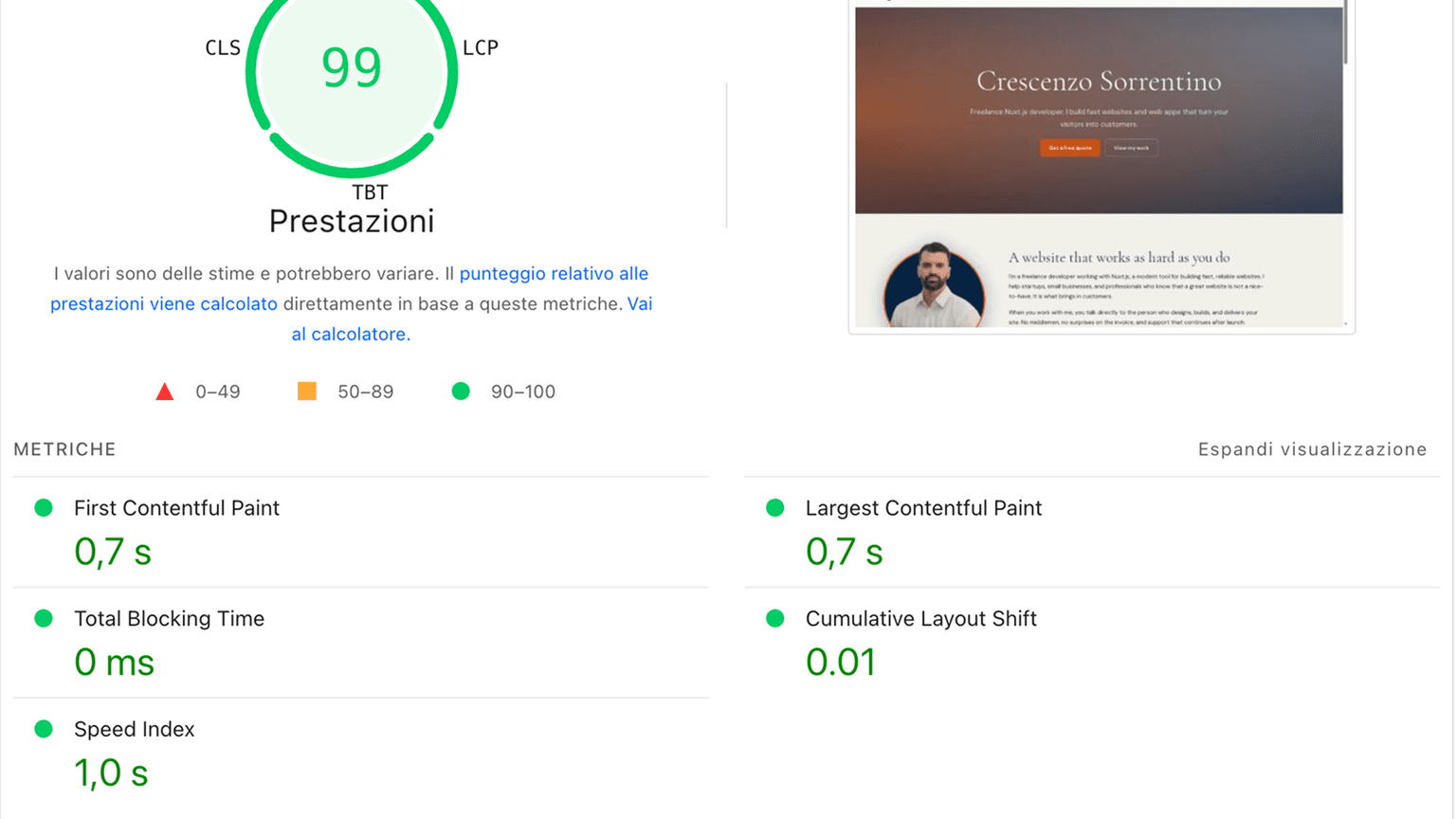
You can test load speed for free at PageSpeed Insights. Open their live projects and run them. If a developer is building fast, performant Nuxt.js sites, the scores reflect it. If the scores are poor, the code is poor.
Nuxt.js is not just Vue with extras
There's a meaningful difference between a developer who knows Vue and a developer who builds production Nuxt.js applications. Nuxt.js adds a full layer of complexity: server-side rendering, routing conventions, module configuration, image optimisation, SEO infrastructure, and deployment to platforms like Vercel.
A developer who knows Vue but hasn't worked extensively with Nuxt.js will spend your budget learning on the job. It's not dishonest, it's just what happens when someone stretches into adjacent territory. Ask specifically about Nuxt.js projects they've shipped, where they were deployed, and what the performance scores look like.
Ask about performance and SEO before you start
If a developer doesn't mention Core Web Vitals, structured data, or image optimisation without being prompted, that's a signal worth paying attention to. These aren't advanced topics. They're the baseline for a site that's worth building.
A good Nuxt.js developer thinks about performance and SEO as part of the architecture, not as a checklist to run through at the end. The decisions that determine your Lighthouse score are made in the first week of a project, not the last.
Fixed scope beats hourly billing for most projects
Hourly rates sound transparent but rarely are. They create an incentive to work slowly and make it nearly impossible to budget accurately. A project quoted at €1,200 can quietly become €2,400 if the scope wasn't defined clearly upfront.
Fixed-scope projects, where the deliverables are agreed before work starts, align the developer's interests with yours. If the scope changes, the price changes. If it doesn't, it doesn't. For most landing pages and web applications, a fixed quote is the only quote worth accepting. If you're not sure what a fair quote looks like, I broke down typical price ranges here.
What a good development process looks like
A developer worth hiring will ask you more questions than you expect before writing a single line of code. What's the goal of the site? Who is the audience? What does a successful outcome look like in six months?
The answers shape every technical decision that follows. A developer who jumps straight to building is one who'll need to rebuild things later.
If you want to see what this looks like in practice, browse some of the projects I've built. Each one started with a clear brief, a fixed scope, and a performance target defined upfront.
If you're trying to figure out whether a developer is the right fit for your project, get in touch. I'm happy to answer questions before there's any commitment on either side.
Frequently Asked Questions
Quick answers to the questions this article raises most often.
How do I know if a developer is actually good at Nuxt.js?
Open their live projects and test them on PageSpeed Insights. Fast, stable scores mean the code is solid. Ask which Nuxt.js sites they've shipped, where they're deployed, and what the performance scores look like.
Should I hire a developer who only knows Vue?
Not for a Nuxt.js project. Nuxt adds server-side rendering, routing conventions, image optimisation, and SEO infrastructure on top of Vue. A Vue-only developer will end up learning those parts on your budget.
Is a fixed quote better than an hourly rate?
For most websites, yes. A fixed quote on an agreed scope means you can budget with confidence and the price only moves if the scope moves. Hourly rates sound transparent but make the final cost hard to predict.