Why your website is losing customers before they even read it
Your site might look fine. But if it takes more than 3 seconds to load on mobile, more than half your visitors are already gone.
Most business owners think about their website in terms of design. Does it look professional? Is the copy clear? Do the colours match the brand? These things matter. But there's a problem that costs more than a bad headline or an outdated logo, and most people never think to check it: speed.
The number that should worry you
53% of mobile users abandon a site that takes more than 3 seconds to load. Not 10 seconds. Three.
By the time your homepage has finished loading, more than half your potential customers on mobile have already left. They didn't read your offer. They didn't see your portfolio. They just left, and went to a competitor whose site loaded in two.
Why slow sites stay slow
The most common culprit is a site built on a platform that wasn't designed with performance as a priority.
WordPress powers 40% of the web, and for good reason. It's easy to set up and easy to manage. But a typical WordPress site with a theme, a page builder, and a handful of plugins loads hundreds of kilobytes of JavaScript and CSS that the browser has to download, parse, and execute before anything appears on screen.
None of that code is doing anything useful for your customer. It's overhead: the cost of using a tool built to be flexible for everyone rather than fast for you. Add cheap shared hosting, unoptimised images, and a few third-party scripts, and you have a site that feels broken even when it technically works.
How slow load times hurt your Google ranking
Slow load times don't just cost you visitors directly. They cost you visibility.
Google uses Core Web Vitals as a ranking signal. A site that scores poorly on Largest Contentful Paint, Interaction to Next Paint, and Cumulative Layout Shift ranks lower in search results than a faster competitor, even if your content is better.
If you're investing time in SEO and content, you may be building on a foundation that Google is quietly penalising.
What a good PageSpeed score looks like
PageSpeed Insights is a free tool from Google that scores your site from 0 to 100 across performance, accessibility, best practices, and SEO.
Most business websites built on WordPress with a standard theme score between 40 and 65 on mobile. A site built from scratch with performance as a first principle scores consistently above 90. You can see what that looks like in practice in my projects.
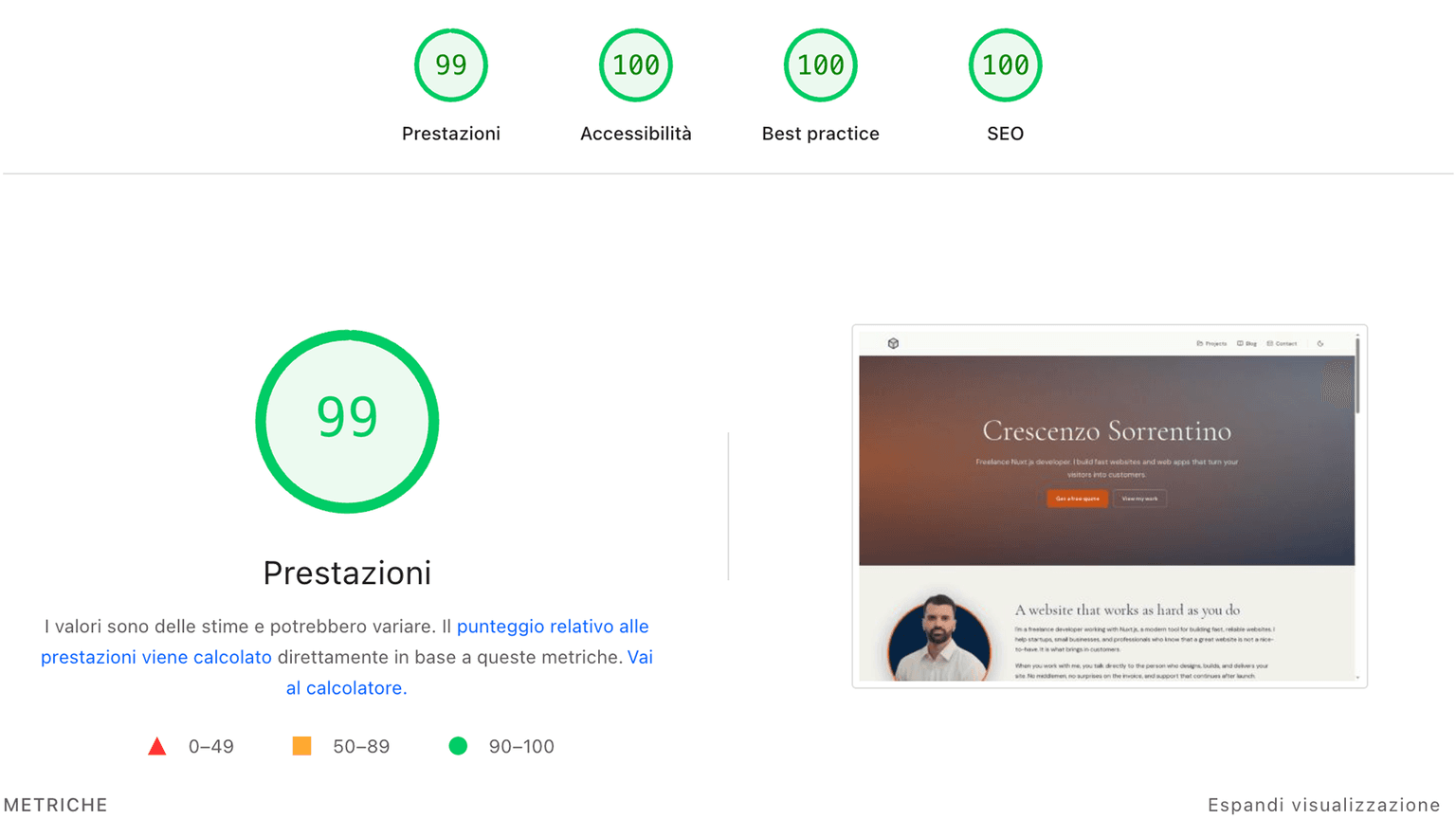
That gap isn't cosmetic. It's the difference between a site that converts and one that quietly loses customers every day.
The fix isn't always a rebuild
Sometimes performance issues can be addressed without starting over. Optimising images, removing unused plugins, switching to faster hosting, and cleaning up render-blocking scripts can move the needle significantly.
But if your site is built on a foundation that was never designed to be fast, there's a ceiling to how far optimisation can take you. At some point, the architecture is the problem. If a rebuild turns out to be the answer, here's what a custom build typically costs.
How to test your website speed
Go to PageSpeed Insights and test your site right now. It's free, it takes 30 seconds, and the results are specific enough to act on.
If your score is below 70 on mobile, you're losing customers to your load time. If it's below 50, the problem is already serious.
Not sure what the results mean or where to start? Get in touch and I'll take a look. I'll tell you honestly what's worth fixing and what isn't.
Frequently Asked Questions
Quick answers to the questions this article raises most often.
How fast should my website load?
Aim for the main content to appear in under 2.5 seconds on mobile. Past 3 seconds, more than half of mobile visitors leave before they see anything at all.
How do I check my website speed?
Use Google's free PageSpeed Insights. Enter your URL and you get a score from 0 to 100 plus a list of specific fixes. A score below 70 on mobile means you're losing visitors to load time.
Can a slow website be fixed without rebuilding it?
Sometimes. Optimising images, removing unused plugins, and moving to faster hosting can help. But if the platform was never built for speed, there's a ceiling, and at some point the architecture itself is the limit.